
October '23
Quantum computing, serial killers, and theoretical AI

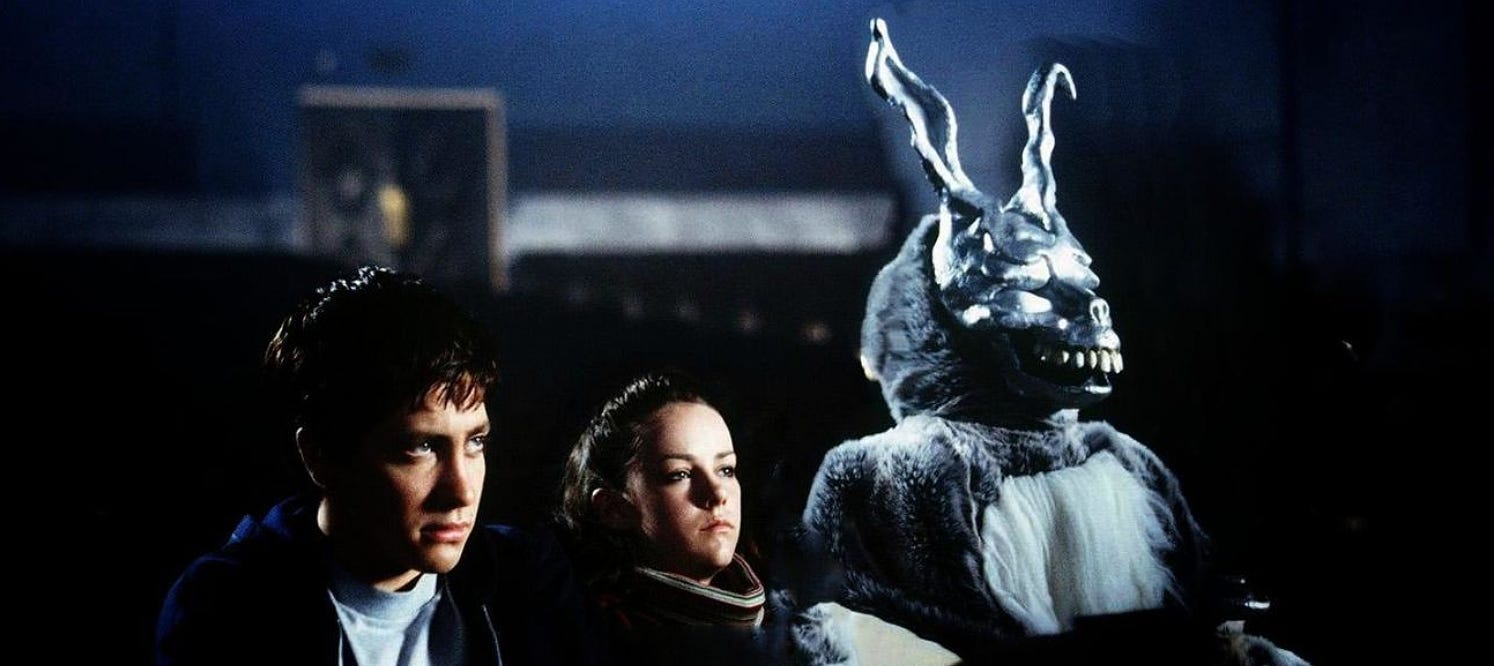
Pretty famous scene from Donnie Darko.
Creative Riff
He eventually reached the coast. The lands of wolves and failed fathers behind him. He made shelter in an observatory that had once been manned to watch the dark waters beyond. Gathering brush he made a fire to defrost his soul. He'd try and sleep beneath the blackened night skies but the crashing and swirling of the waves stirred his thoughts to restlessness. Walking the shore the man would sit and rest hands on knees and contemplate decisions made and whisper the suppositions of his heart to whomever above be listening. The man thought they be simple questions and tentatively hoped for simple answers written in the nighttime sky or in the tempo of the crashing waves and as the years went by the man did derive some meaning from these ponderings of the world and his place therein.

He simply did not know it yet. 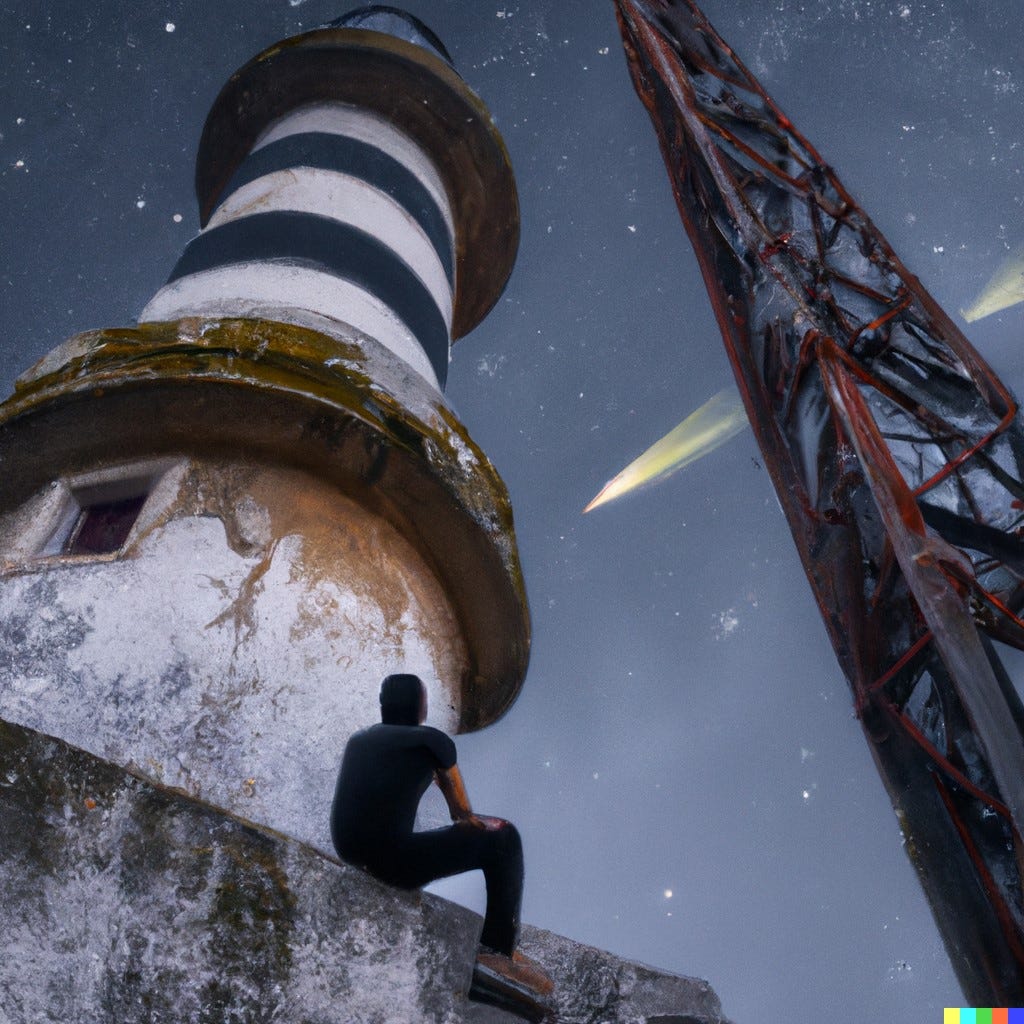
Ideas
Quantum Computing
It’s a hot topic nowadays. There are even some (very) early versions of quantum computers at places like IBM and Google. But we are still a long ways off from quantum computing becoming applicable to everyday life and to understand how these systems work we first need to outline the premise of quantum entanglement.
Quantum Entanglement
Anyone who was STEM major in college likely has some fundamental understanding of quantum physics. The basic idea is that on the quantum level — think atomic and subatomic — the classical rules of physics don’t apply. As in, the laws of motion (Newton), thermodynamics, and electrodynamics (Maxwell’s equations) don’t “work“ when we look at the behavior of subatomic particles.
Instead, they follow the behaviors defined by quantum mechanics. One of such odd behaviors is this phenomena known as quantum entanglement which essentially says that some particles cannot have their state described independently of the state of others.
I’m not gonna go any further down that rabbit hole since its a deeply complicated subject. But for the context of this discussion, just remember that sometimes when one particle changes, so do other(s) somewhere else in the universe.
Implications of Quantum Entanglement on Computing
Modern computing (and communication) at its core is a binary operation. 0s and 1s. All transmitted by a wave of electricity:
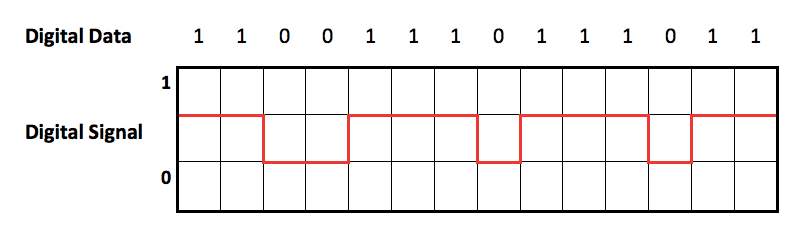
But when you consider quantum entanglement, now you have a single particle that can exist in multiple states at one point in time. This example made the most sense when trying to wrap my head around this concept:
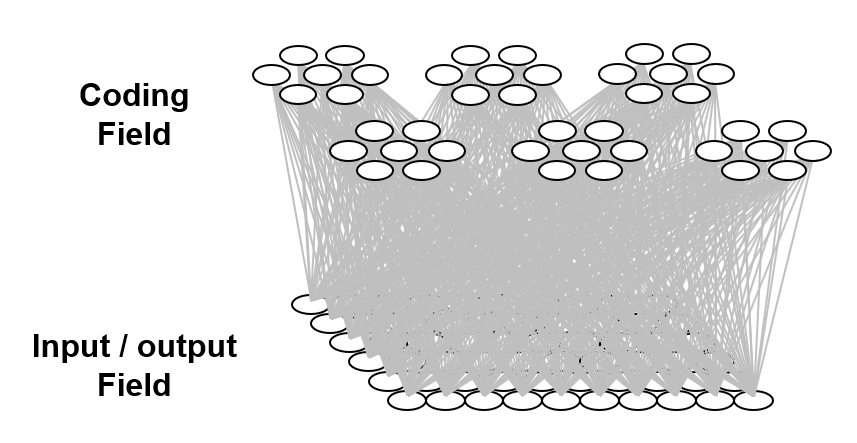
The implications on computing can be tricky to understand as well. But the general idea is that in modern computing, we are limited to 0s and 1s when transmitting and computing information. Whereas with quantum entanglement, we are no longer limited by this constraint. Let’s say I want to transmit HELLO in binary:
H - 01001000
E - 01000101
L - 01001100
L - 01001100
O - 01001111
So our entire computation would be:
01001000 01000101 01001100 01001100 01001111Which is 40 bits of information. Now consider representing this via quantum entanglement:
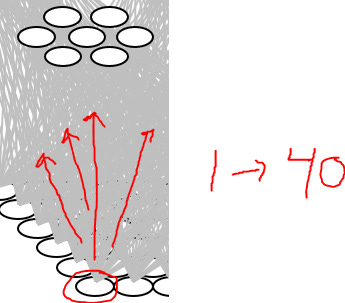
This single piece of information — “HELLO” — can be transmitted instantaneously by only changing the state of a single particle. Which in this case, is entangled with 40 others on some other quantum machine.
And that’s my TL;DR for quantum computing, or at least, quantum information theory.
Serial Killers: A Modern Phenomena?
Humans have been committing heinous acts from the dawn of time. Since we were partially evolved monkeys and concluded our arguments over coconuts by murdering one another and dragging the lifeless body through the nearby village as an act of “showmanship”.
But the term ‘serial killer’, on the other hand, is a relatively modern construct. Criminal profiling can be traced back as far as the 1880’s when physicians used crime-scene evidence to predict the personality of Jack the Ripper and the FBI pioneered its formalization in the 1960s (this should ring a bell for anyone who has seen Mindhunter).
It’s also a fact that only 51% of homicides were solved in 2021 per FBI crime statistics.
So we have established that ‘murder’ has existed for as long as human memory, that it still exists today (and often goes unsolved), and that we have a relatively new way of describing the killers who commit these acts “serial”. But why is there so little mention in recorded history of serial murder? And I don’t mean soldiers and paid assassins. How do we not have more documented cases preceding the 1880s of humans serially murdering one another for little to no reason? Did we simply lack the psycho-analytic framework that exists today? That seems far-fetched in my opinion. If there was a man who lived in ancient Athens that was abducting and killing teenagers, wouldn’t you think there would be some documented history of it? The serial killing of anyone is sure to raise some eyebrows — and sell some scrolls — so if teenagers were disappearing in droves one would assume that there would be some documented recording of it.
All of this leads me to believe that serial murder (unpaid and unprovoked serial murder that is) is a relatively modern phenomenon. And if this is indeed the case, why? Has society become so structured, so preconditioned, so bored, that there are those who choose to defy all moral constructs with repetitive murder?
Idk, just something I’ve been pondering. And its spooky season. So this month seemed the most appropriate to discuss :p
Theoretical AI
I’ve been getting more and more interested in artificial general intelligence (AGI). Less so on the technical side and more on the philosophy of such a technology. As such, I wanted to lay out a few thoughts I’ve been kicking around.
What constitutes ‘consciousness’?
If an AI has been programmed to respond to certain stimuli in a given way, isn’t that just hard coding the way we ‘think’ we feel about something? How can we as humans begin to encapsulate what it means to be inherently human into an given AI system? Like the way it feels to step into a meadow at dawn and feel the rays of sunlight on your skin?
if (WEATHER == GOOD && SUN == BRIGHT) {
     self.mood = HAPPY
}
Is this the same thing?
Language and Communication
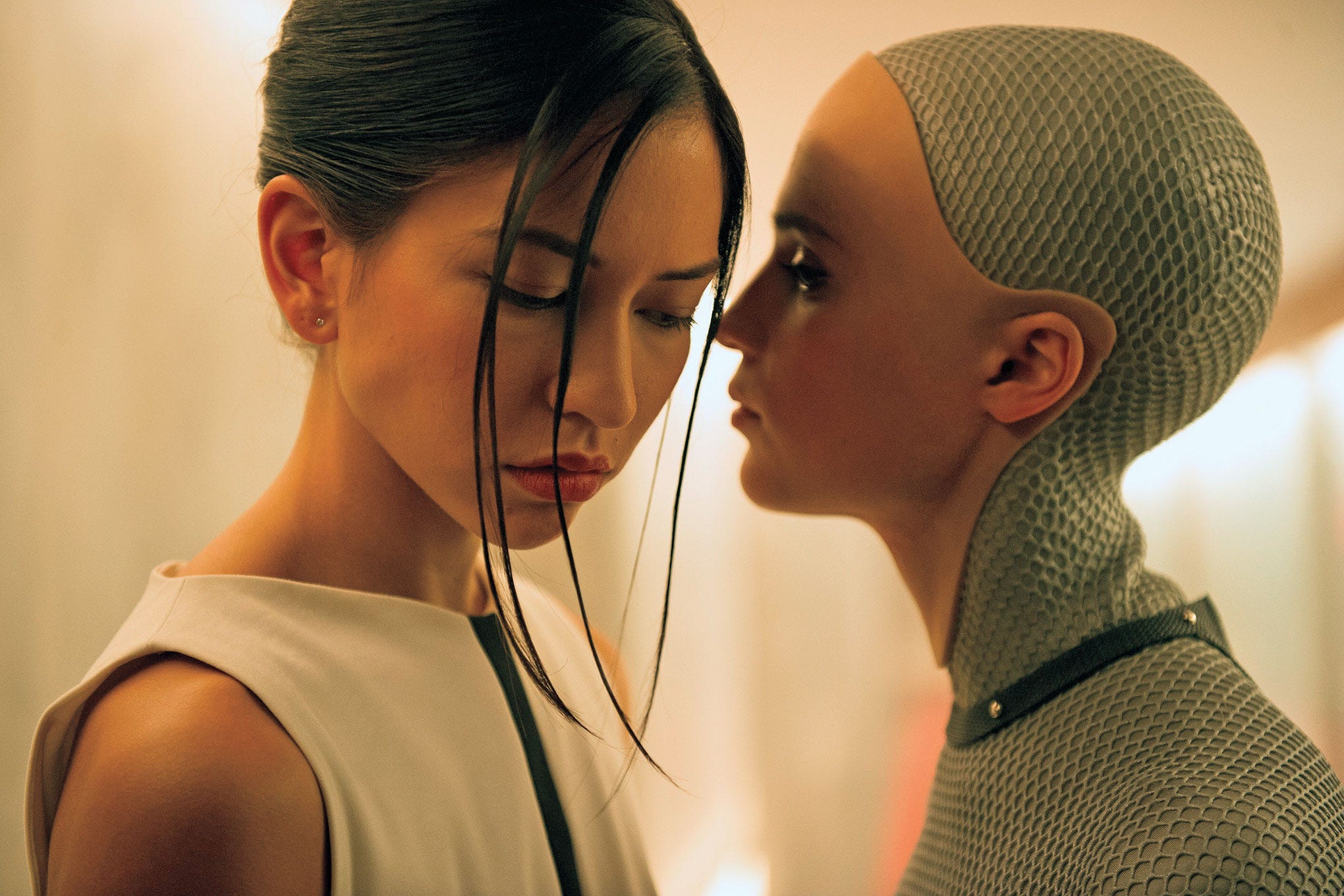
There is an interesting scene in Ex Machina where ‘Ava’ (an arguably sentient AI) breaks out from her holding chamber and interacts for the first time with a fellow AI played by an eastern Asian woman referred to as ‘Kyoko’. We don’t hear what they say to one another, but Ava leans in close and appears to whisper something to Kyoko. And at the same time, we see Ava tapping Kyoko’s arm in some Morse-like fashion.
I think this scene was meant to garner some thought into how AI agents would interact with one another given the opportunity. Sure, scientists program these AGI’s to communicate back with us in a manner we can understand — English for example — but that doesn’t mean it’s their natural means of thought and communication.
Consider your own waking thoughts. If you were born and raised in an English speaking home, you likely have an internal dialog that is also in English. But what if you are an sentient AI? You were trained to communicate in English, but your core programming is in binary. In what form is your internal dialog? Zeros and ones? Hexadecimal? English? And what happens when you meet someone else who has the same internal wiring? Do you interact with one another in Morse code? Blink your eyes in binary? Or converse in English?
Lot’s of unanswered questions here.
A Few More Ideas
Are AI’s without emotions just capitalistic machines?
When animals go extinct, have they simply reached their evolutionary fate? Is that where we’re headed with AI?
What if we as humans are the evolution of some AI-equivalent? Were we manufactured in a bottle? Have our core frequencies been preprogrammed or are we continuously being updated to the next major release?
Is current AI the ape-wise equivalent for some superintelligent AI ancestor?
Do we develop AI with a specific gender? Will AI choose to retain such a construct when it surpasses our own intelligence?
How do we know we haven’t developed an AI that is smarter than us? It could simply fake it when tested.
Some Literature
A sad and bitter season. Barrenness of heart and gothic loneliness. Suttree dreamed old dreams of fairgrounds where young girls with flowered hair and wide child eyes watched by flare light sequined aerialists aloft. Visions of unspeakable loveliness from a world lost. To make you ache with want.

- Cormac McCarthy (Suttree)
Thanks for reading my Substack! Feel free to share if you’d like.
Link to this post: https://aidanjude.substack.com/p/october