
March '23
Amazon's $40bn "advertising" business, thought experiments, and Roman traditionalism

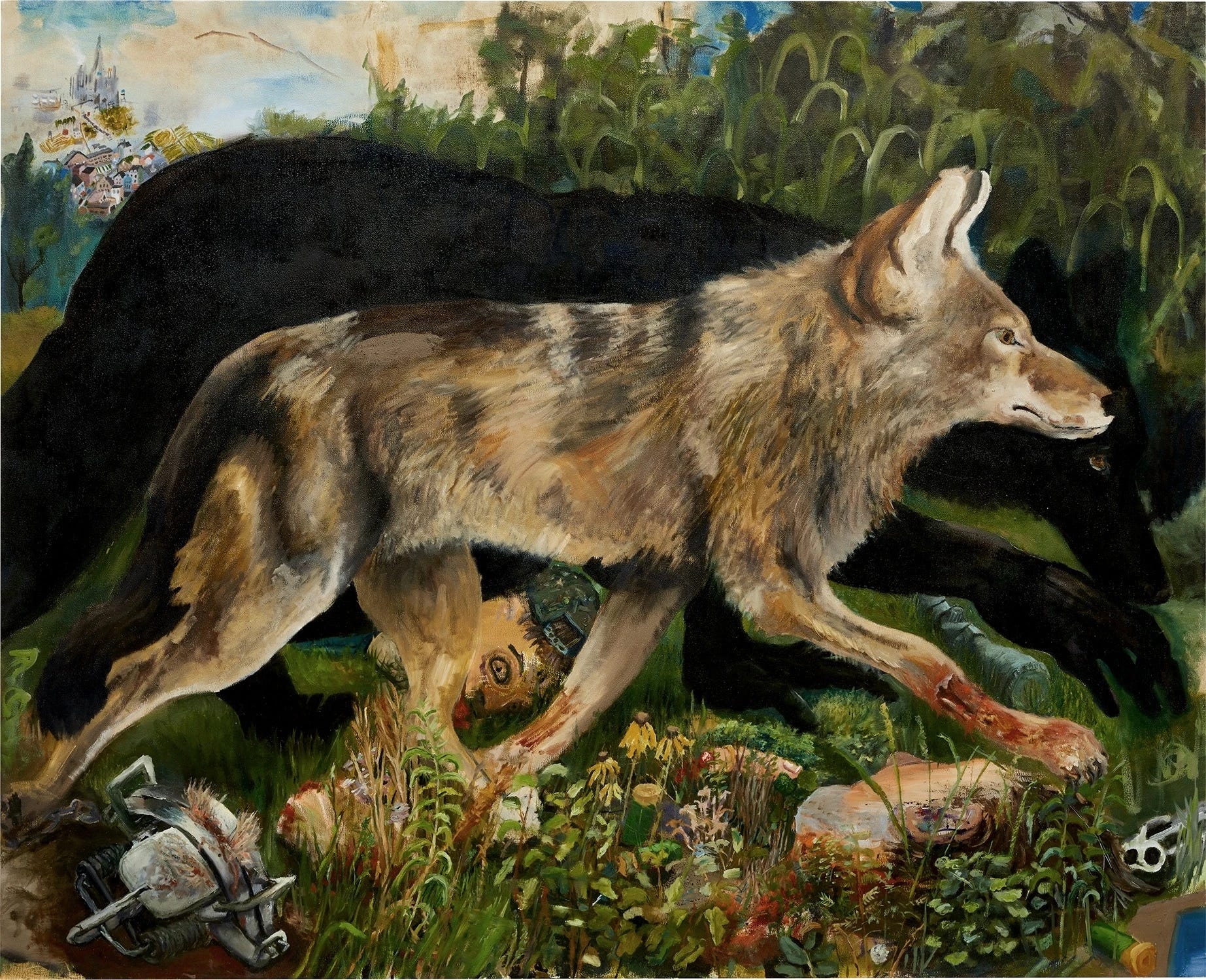
Anastasis of the Wild, 2019 by Celeste Dupuy-Spencer (b. 1979)
The News
Amazon: World’s Largest “Advertiser”
There was a really interesting piece by tech blogger Benedict Evans last week regarding Amazon being the world’s largest “advertiser”. To clarify, advertising in this case means the “suggested” products on Amazon.com when you are browsing/searching for products. Many consider these “advertisements” to be a nuisance given you have to scroll through 2-4 suggested products before getting the default search results, but Amazon has managed to turn this feature into a 40 billion dollar profit with minimal operating costs. Amazon simply opened up the marketplace and now lets vendors bid for “advertising” time. Key the invisible hand.
It’s interesting to consider the semantics of this. For one, in a marketplace with thousands (if not millions) of similar products, how do you prioritize one over another from a marketplace perspective? Is it reviews based? Sales? And on the other hand from a vendor/seller perspective, does letting the market compete for “air time” make things more fair? Isn’t that how things work in the real world? You create a product and pitch it on TV + billboards to drive up sales?
Another aspect of this is how Amazon prorates their advertising slots. Are advertising rates based on cumulative searches? Sales? Time of day? I’d be willing to bet Amazon’s advertising pricing model includes all the above.
But perhaps most importantly is that Amazon made 40 billion dollars with minimal effort and exorbitant resultant margins (whereas the Prime + AWS business make great profits, but suffer from steep operating expenditures). It almost feels like in today’s day and age you can make money on pretty much anything - assuming you have a massive platform that is.
Full article: https://www.ben-evans.com/benedictevans/2023/3/6/ways-to-think-about-amazon-advertising
American Banking: Groupthink 101
It came out earlier this month that Silicon Valley Bank (SVP) had collapsed and this was was due in large part to SVP purchasing large sums of US treasury bonds over the past few years. While this is typically a safe investment — one I could see financial advisors recommending at this very moment due to existing uncertainty in global markets — this was not the case for SVP given the run that was made on the bank in recent weeks. The run on the bank by investors resulted in the bank having to sell their bonds prematurely for pennies on the dollar since better bonds are available at this very moment due to recent interest rate hikes by the Fed to reduce inflation. From this, I find myself ever-cynical of the American banking system. It seems reminiscent of 2008. Aka, banks assuming the worst can’t happen — and if it does? — the United States government will be there to bail them out (at the expense of the taxpayer of course).
Ideas
Hitchhikers
Very random: I realized this week that I’ve never seen hitchhikers before coming to Flagstaff. I mean, yeah, you’d see the occasional one on I-35 in Iowa, but in Flagstaff, I see hitchhikers every single day on 89-A. Maybe its a coastal thing? My barber was also telling me that apparently Flagstaff really started to grow ~15 years go (mostly due to an influx from California). My brain recognizes some connection between California + hitchhikers but can’t quite formalize it. Anyway - I still havent offered a ride to one yet :p
The Way We See Colors
I’m taking a course currently for my masters degree called Visual Interfaces to Computers. It’s primarily focused on how to set up cameras such that you can train a computer program to “recognize” certain objects. One of the primary ways this is done is by a means called “color segmentation” where you mark a pixel as either white or black depending on if its above or below a certain threshold. This results in a greyscale image where white represents the portion of the image that is similar to the color you are looking for (and those that are not are seen as black). Here’s an example where an image of a gold fish is segmented by the color orange (original image on the right):
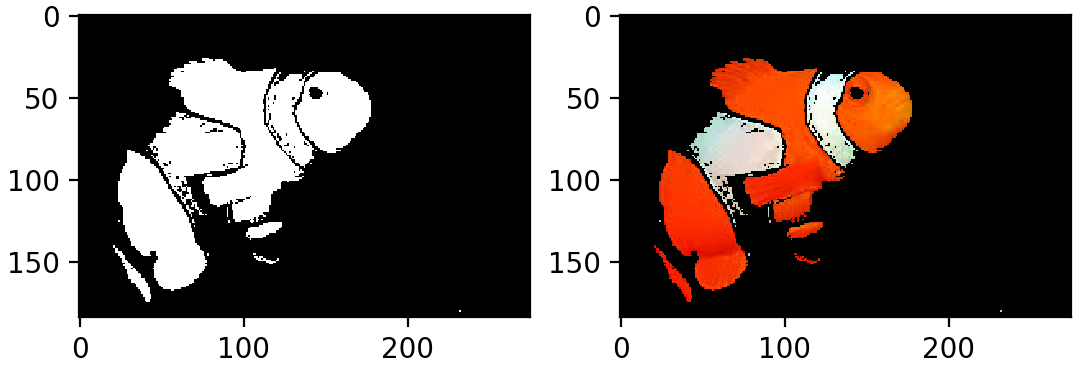
Once you distill an input image down to black or white - then you can compare the shape, size, etc to other input images and find those that are “nearby” - aka find other images that are similar to our orange fish here. That alone is pretty intriguing but the real interesting tidbit surrounding all this color stuff — in my opinion — is that apparently humans are very good at seeing differences in the color green but very poor at seeing differences in the color blue (red falls somewhere in the middle). Why does this matter? Because I find it interesting that when you go to the grocery store, you will notice the minute differences between the heads of broccoli simply because you see the nuance in green more readily. Whereas the ripeness of blueberries will have less of an impression. Human perception is weird.
Thought Experiment: Original Position
I watched a movie called The Fountain last week starring Hugh Jackman which resulted in going deep down the metaphysics rabbit hole one night afterwards. While on this escapade, I came across the logician John Rawls and his relatively famous thought experiment titled “Original Position” which I thought was really interesting. The basic idea is as follows:
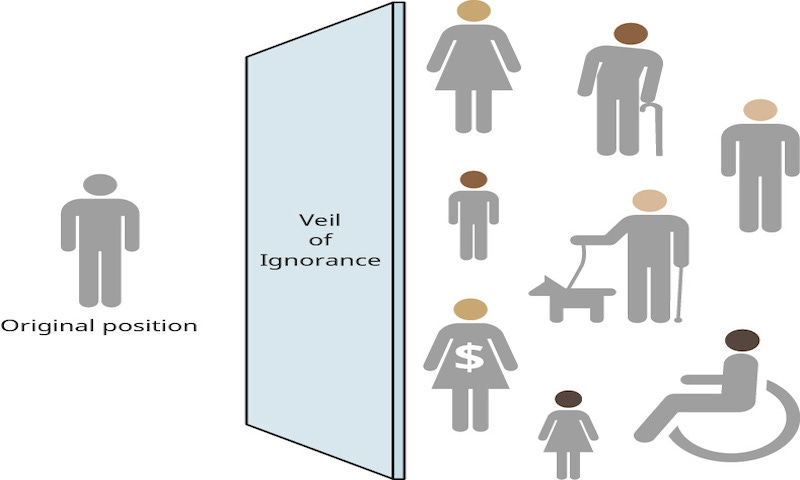
You are asked to structure society behind a “veil of ignorance”. That is, you must structure society such that you don’t know where you will be placed on the other side (you may be smart, rich, poor, disabled, etc). Rawls proports that by doing so, you would structure society more fairly since you will impart principles to the benefit of “most” given that is where you are likely to land on the other side.
I, personally, don’t think this is a realistic approach given inherent human biases - which is probably why this thought experiment is oft-referred to as ahistorical. It would, however, be interesting to have some semi-unbiased AI try and design a culture behind a veil of ignorance. Wouldn’t be surprised if the AI placed humans at the bottom of the totem pole :p
Roman Society: Traditionalism With Trade-Offs
I’ve been doing a lot of reading surrounding Roman culture recently and find myself ever-surprised at how traditional a society could be while also maintaining a severe air of liberalism in very specific facets. From a traditionalistic standpoint, Roman society was heavily imparted with themes of heredity, property, citizenship, and wealth. It was also heavily veered towards men — women were defined by the social status of their fathers or husbands. Then, on the flipside of the coin, it was also acceptable to enjoy same-sex relationships and even engage in acts of pederasty (think man + boy) without a degradation in social status. So to sum up, honor your father and mother but feel free to fondle the neighbor boy?
Some Literature
Character teaches above our wills. Men imagine that they communicate their virtue or vice only by overt actions, and do not see that virtue or vice emit a breath every moment. - Ralph Waldo Emerson